Can a good skincare routine really keep your skin looking younger — or is there a point when face creams simply cannot do everything?
Skincare has come a long way. Today, there are sophisticated formulations containing retinoids, antioxidants, peptides, ceramides, hyaluronic acid, niacinamide and a host of other scientifically researched ingredients.
A well-designed skincare routine can make a genuine difference to the health and appearance of the skin.
But there is also a point at which we need to recognise an important distinction:
Skincare can protect, support and improve the skin — but it cannot completely replace the changes that occur deeper within the skin as we age.
That does not mean there is a particular birthday when your moisturiser suddenly stops working. There isn’t.
Instead, the point at which skincare may no longer be enough depends on what is happening beneath the surface of the skin, as well as your genetics, sun exposure, lifestyle, hormonal changes and how your skin has aged over time.
At Austin Brewer Facial Aesthetics, the approach is not about chasing a younger face. It is about understanding what is actually changing and choosing an appropriate, proportionate way of supporting the skin and facial appearance.
What actually happens to our skin as we age?
Ageing is a biological process, and the skin does not simply become “wrinkly”.
Several things happen simultaneously.
The epidermis — the outermost layer of the skin — becomes thinner and its ability to retain moisture can decline. There are changes in collagen, elastin and other components of the extracellular matrix. Skin can become drier, less elastic and more fragile.
The National Institute on Aging notes that age-related changes in collagen and elastic fibres contribute to wrinkles, reduced elasticity and increased skin fragility.
At the same time, the deeper dermal structures gradually change.
Collagen provides much of the skin’s structural framework, while elastin contributes to its ability to stretch and return towards its original shape.
With time, the balance between production and degradation changes.
The result can be familiar: fine lines become more established, skin loses some of its firmness, pigmentation becomes more uneven and the complexion may appear duller.
But there is another important contributor.
Sun exposure can age the skin faster
If there is one environmental factor that deserves particular attention when discussing premature skin ageing, it is ultraviolet radiation.
Clinical fact: repeated exposure to ultraviolet radiation is a major driver of photoageing — the premature ageing caused by cumulative sun exposure. Photoageing can produce wrinkles, pigmentation changes, roughness and loss of skin tone.
This is why someone in their 40s who has had considerable cumulative sun exposure may have very different skin characteristics from another person of the same age who has consistently protected their skin.
UV radiation can affect the dermal extracellular matrix and promote processes that break down collagen.
This matters because a moisturiser can improve hydration and make the skin appear smoother, but it cannot simply replace lost structural collagen overnight.
That is one of the reasons prevention remains so important.
So, what can face cream actually do?
Quite a lot — when expectations are realistic.
A moisturiser helps support the skin barrier and can increase water content in the outer layers of the skin. When skin is properly hydrated, fine lines can temporarily appear less noticeable and the surface can feel smoother.
Some skincare ingredients have more specific biological effects.
Retinoids, for example, have some of the strongest evidence in topical skincare for addressing photoaged skin.
Clinical fact: systematic reviews of randomised controlled trials have found topical tretinoin to improve clinical signs of photoageing, including fine and coarse facial wrinkles.
Tretinoin is a prescription retinoid and should not be confused with cosmetic retinol. They are related vitamin A derivatives, but they are not identical products and should not be assumed to have equivalent potency or evidence.
A 2024 systematic review described tretinoin as the established “gold standard” topical treatment for photoageing, while also highlighting tolerability issues such as dryness, peeling, irritation and burning.
This is an important point because effective skincare is not necessarily about buying the most expensive cream.
It is about choosing ingredients with a sensible rationale and using them consistently.
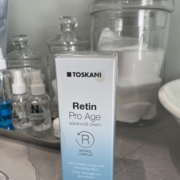
What about retinol?
Retinol has become one of the most popular anti-ageing skincare ingredients, and there is scientific evidence supporting the broader role of topical retinoids in improving aspects of photoaged skin.
However, the evidence for over-the-counter cosmetic retinol products is less straightforward than the marketing sometimes suggests.
Different formulations contain different concentrations, delivery systems and stabilising technologies, and product quality varies considerably.
A 2024 review concluded that cosmetic retinoid derivatives such as retinol, retinaldehyde and retinyl esters can be useful and generally well tolerated, while prescription tretinoin has a much more substantial clinical evidence base.
In other words, retinol can be a valuable part of a skincare routine, but it is not a magic eraser for every aspect of facial ageing.
The most important anti-ageing product may be the least glamorous
There is a temptation to think of anti-ageing skincare as a complicated collection of serums.
In reality, one of the most important things you can do for your skin is protect it from further damage.
Dermatologists commonly recommend broad-spectrum sunscreen with an SPF of 30 or higher, alongside moisturiser, as fundamental components of an anti-ageing skincare routine.
This is particularly relevant in the UK.
Even though we may associate sun damage with holidays abroad, UV exposure is cumulative. Everyday exposure while walking, driving, sitting outside or travelling can all contribute to cumulative photodamage.
So before investing heavily in a cabinet full of anti-ageing products, it is worth asking:
Am I consistently protecting my skin from further damage?
Prevention is always easier than trying to reverse established photodamage.
But what about stress?
Stress is another factor frequently mentioned when people talk about their skin looking older.
There is good reason for the association, although it is important not to oversimplify it.
Periods of prolonged stress can affect sleep, diet, routines and general wellbeing. These factors can indirectly influence how healthy and rested the skin looks.
Stress can also interact with inflammatory and hormonal pathways within the body.
However, it would be misleading to say that stress alone “ages your face”.
Facial ageing is multifactorial.
Intrinsic ageing + genetics + UV exposure + hormonal changes + environmental factors + lifestyle = the appearance we eventually see in the mirror.
This is why two people of exactly the same age can have very different skin.
When does skincare stop being enough?
This is perhaps the most useful question.
There isn’t an age at which everyone should move from skincare to aesthetic treatments.
Instead, skincare may start to feel insufficient when the concern you are trying to address is no longer primarily a surface-skin problem.
For example, a moisturiser may improve dryness.
A retinoid may improve aspects of photoageing.
An antioxidant may help support a comprehensive skincare strategy.
But none of these can completely replace structural volume that has been lost over time.
Nor can a face cream relax an overactive facial muscle responsible for a dynamic expression line.
And skincare cannot physically reposition tissue that has changed with ageing.
This is where understanding the difference between skin ageing and facial ageing becomes important.
Skin ageing versus facial ageing
Think of the face as having several layers.
There is the skin itself.
Beneath it are connective tissues, fat compartments, muscles and other structures that contribute to facial shape and movement.
As we age, changes can occur across several of these levels.
The skin may become thinner and less elastic.
Collagen and elastin change.
Facial fat compartments can alter in volume and position.
Bone structure also changes gradually with age.
Muscular movement continues to influence expression lines.
The result is therefore much more complex than simply “more wrinkles”.
This is why applying increasingly expensive creams may eventually produce diminishing returns.
The cream is being applied to the skin — but the problem may no longer exist exclusively within the skin.
Does that mean you need Botox or fillers?
Absolutely not.
This is where responsible aesthetic medicine should differ from an aggressive “anti-ageing” sales approach.
The purpose of an assessment should not be to find something to inject.
It should be to determine whether anything needs treating at all — and, if so, what would be appropriate.
For some people, the answer may simply be better skincare and consistent sun protection.
For others, a medically led skin treatment may be appropriate.
For someone concerned about dynamic expression lines, botulinum toxin may be considered following an appropriate clinical assessment.
For someone experiencing loss of facial volume or definition, carefully placed dermal filler may sometimes be considered.
For someone whose main concern is skin quality rather than volume or movement, treatments such as skin boosters, Profhilo, polynucleotides, microneedling or carefully selected peels may be discussed depending on the individual.
The important point is that these treatments address different biological or aesthetic concerns.
They are not interchangeable.
Skin quality is not the same as volume
This distinction is particularly important.
Someone may look at their face and say:
“My skin looks tired.”
But “tired-looking skin” can have several causes.
It could be dehydration.
It could be pigmentation.
It could be photodamage.
It could be loss of elasticity.
It could be reduced facial volume.
It could be dynamic lines.
Or it could simply be the result of poor sleep and a stressful period of life.
Treating the wrong problem can produce disappointing results.
This is why a proper consultation matters.
Rather than asking, “What treatment do I need?”, a better question is:
“What is actually contributing to the change I am noticing?”
When skincare and aesthetic treatments work together
The best results do not necessarily come from choosing between skincare and aesthetic treatments.
Often, they complement each other.
Think of skincare as the daily maintenance programme.
It helps protect the skin, maintain the barrier, improve hydration and address particular concerns.
Professional treatments can then be considered where appropriate to address concerns that skincare alone cannot adequately influence.
This is particularly relevant when the aim is to maintain a natural appearance.
A good aesthetic plan should not necessarily make people think you have had something done.
The aim may simply be to look fresher, healthier and more rested while retaining your normal facial character.
There is no universal “right age” for aesthetic treatment
One of the most common misconceptions about facial aesthetics is that there is a particular age when people should start.
There isn’t.
Some people may begin exploring professional skin treatments in their 20s because of pigmentation, acne scarring or other skin concerns.
Someone in their 30s may be more interested in preventative skincare and subtle treatment of early changes.
Someone in their 40s, 50s or beyond may be looking at a combination of skin quality, pigmentation, facial movement and structural changes.
And someone of any age may decide that they do not want aesthetic treatment at all.
All of those choices are perfectly valid.
The role of a medical aesthetics practitioner should be to assess, advise and help someone make an informed decision — not manufacture insecurity.
What should your anti-ageing routine actually look like?
For most people, simplicity is a good starting point.
Morning
A sensible morning routine might include:
- A gentle cleanser, if required
- An antioxidant or other evidence-based active appropriate to your skin
- Moisturiser suited to your skin type
- Broad-spectrum sunscreen, ideally SPF 30 or higher
Evening
Depending on individual skin type and tolerance:
- Gentle cleansing
- A suitable active ingredient such as a retinoid/retinol where appropriate
- Moisturiser and barrier-supporting ingredients
There is no prize for having ten different products.
In fact, introducing multiple active products at once can increase irritation and make it harder to understand what is actually helping.
The American Academy of Dermatology specifically advises focusing on individual concerns and allowing products time to work rather than introducing numerous anti-ageing products simultaneously.
When should you consider professional advice?
A consultation can be useful when you have reached the point where your skincare routine is working well but you are still concerned about changes that creams cannot realistically address.
That might include:
- Persistent dynamic lines
- Loss of facial definition
- Changes in facial proportions
- Loss of volume
- Established pigmentation or photodamage
- Reduced skin elasticity
- Persistent dull or tired-looking skin
- Fine lines that remain despite good hydration and skincare
- A desire to improve skin quality rather than simply add volume
It is also worth seeking professional advice if you are unsure whether a concern is actually caused by ageing.
Not every line, mark or change needs treatment.
And not every treatment is suitable for every person.
So, when do face creams stop being enough?
The honest answer is:
Face creams don’t suddenly stop working. Their role simply has limits.
Skincare remains important throughout life because healthy skin needs ongoing protection, hydration and appropriate care.
But ageing is not solely a surface phenomenon.
Once changes involve deeper collagen structures, facial movement, tissue volume, elasticity and facial architecture, topical skincare alone may not be capable of addressing every concern.
That is not a failure of skincare.
It is simply biology.
The most sensible approach is therefore not to abandon skincare when you reach a certain age, but to understand what skincare can realistically achieve — and recognise when a concern may require a different approach.
A medically led approach to facial ageing
At Austin Brewer Facial Aesthetics, the philosophy is centred on subtle, considered and medically led aesthetic care.
The objective is not to make everyone look younger or to encourage unnecessary treatment.
It is to understand the individual face, the changes that have occurred and the result the patient is hoping to achieve.
Sometimes that means recommending better skincare.
Sometimes it means doing nothing.
And sometimes, where clinically appropriate, it may mean discussing treatments that work at a different level from topical skincare.
The most natural-looking results usually begin with a good understanding of the problem rather than a predetermined treatment.
Good skincare protects the skin. Medical aesthetics can, when appropriately used, address some of the changes skincare cannot. The skill lies in knowing the difference.
The bottom line
If your skin is dry, dull or showing early signs of photoageing, improving your skincare routine may make a significant difference.
If you have established lines, changes in facial volume, loss of definition or other structural changes, applying more cream is unlikely to solve the entire problem.
And if you are considering aesthetic treatment, the question should never simply be:
“What can I have done?”
A better question is:
“What is causing the change I am seeing, and what is the most appropriate way to address it?”
That is where an individual, medically informed assessment becomes far more valuable than following the latest skincare trend.
Clinical facts at a glance
Fact 1: Ultraviolet radiation is a major contributor to premature skin ageing and photoageing.
Fact 2: Ageing involves changes in collagen, elastin and other components of the skin’s supporting structures, as well as changes to the epidermis and skin barrier.
Fact 3: Topical tretinoin has substantial clinical evidence for improving photoaged skin, including facial wrinkles and pigmentation changes.
Fact 4: Sunscreen and moisturiser remain fundamental components of an evidence-based approach to maintaining healthier-looking skin.
Fact 5: No single skincare product can address every aspect of facial ageing. Ageing occurs across multiple layers and structures of the face, which is why expectations from topical skincare need to remain realistic.
Fact 6: The appropriate treatment for facial ageing depends on the individual’s anatomy, skin condition, concerns, medical history and desired outcome. There is no universal age at which aesthetic treatment becomes necessary.
Frequently Asked Questions About Skincare, Ageing & Facial Aesthetics
1. When do face creams stop working for ageing skin?
Face creams don’t suddenly stop working at a particular age. Good skincare remains important throughout life, particularly moisturiser and daily broad-spectrum SPF.
The difference is that creams can only influence certain aspects of ageing. Moisturisers can improve hydration and temporarily soften the appearance of fine lines, while ingredients such as retinoids can improve aspects of photoaged skin over time. However, creams cannot replace lost facial volume, alter muscle movement or reposition deeper facial tissues.
So, rather than asking when your skincare has “stopped working”, it is more useful to ask whether the concern you are trying to improve is still primarily a skin problem. If it involves deeper structural changes, skincare alone may no longer be enough. (AAD)
2. Can skincare reverse facial ageing?
Skincare can certainly improve the condition and appearance of ageing skin, but “reverse” is probably too strong a word.
Consistent sun protection can help prevent further photoageing, moisturisers can improve hydration and the appearance of fine lines, and well-established ingredients such as topical retinoids can improve aspects of wrinkles, pigmentation and skin texture.
What skincare cannot do is completely reverse every change associated with getting older. Facial ageing involves much more than the surface of the skin, including changes to collagen, elasticity, facial fat and other underlying structures.
Good skincare is therefore better thought of as protecting and maintaining your skin while addressing the changes that topical products can realistically influence. (AAD)
3. Can face cream replace Botox?
No. Face cream and botulinum toxin work in completely different ways.
A topical skincare product is applied to the surface of the skin and may improve hydration, texture, pigmentation or aspects of photoageing depending on its ingredients.
Botulinum toxin, when medically appropriate, acts on targeted muscles and reduces their ability to contract. This is why it can be used to soften certain dynamic lines caused by repeated facial movement.
That doesn’t make one “better” than the other. They simply address different things. A good skincare routine remains important whether or not someone chooses to have aesthetic treatment.
4. Can skincare replace dermal fillers?
Generally, no — because they address different levels of facial ageing.
Skincare can improve the surface quality of the skin, hydration, pigmentation and, with appropriate active ingredients, some aspects of fine lines and photoageing.
Dermal fillers are designed to be placed beneath the skin and can be used, where appropriate, to restore or enhance volume, improve definition or address certain changes in facial contour.
That does not mean everyone with facial volume changes needs filler. In fact, a good assessment should establish whether volume loss is actually the issue before treatment is considered.
The aim should be to treat the underlying concern, rather than simply adding more product.
5. What is the difference between skin ageing and facial ageing?
They overlap, but they aren’t quite the same thing.
Skin ageing refers to changes such as dryness, reduced elasticity, pigmentation, fine lines, thinning and photoageing.
Facial ageing is broader. It can involve the skin as well as changes in collagen, soft tissue, facial fat, muscle activity and the underlying facial framework.
This is one reason someone can have beautifully cared-for skin but still notice changes in facial shape or definition.
It also explains why skincare remains important but cannot necessarily address every change that occurs as we get older.
6. Does stress cause premature skin ageing?
Stress is often blamed for making us “age faster”, but the reality is more complicated.
Periods of prolonged stress can affect sleep, diet, exercise, alcohol consumption and general wellbeing, all of which can influence how healthy and rested the skin looks.
There are also biological pathways linking stress with inflammatory and hormonal processes, but it would be an oversimplification to say that stress alone causes facial ageing.
Think of ageing as the result of multiple influences — genetics, natural ageing, UV exposure, lifestyle, hormones, environment and general health — rather than one single cause.
And sometimes what looks like ageing is simply a face that is exhausted.
7. What is the best skincare for ageing skin?
There isn’t one perfect skincare routine for everyone.
A sensible starting point is surprisingly simple: gentle cleansing, moisturisation and daily broad-spectrum SPF 30 or higher. From there, skincare can be tailored according to your particular concern, whether that is pigmentation, dryness, fine lines, uneven texture or sensitivity.
Retinoids and retinol can be useful options for some people, but they aren’t suitable for everyone and can cause irritation if introduced too aggressively. Prescription retinoids such as tretinoin have a stronger clinical evidence base than cosmetic retinol products. (AAD)
The best routine is usually the one that suits your skin, that you can tolerate and — importantly — that you will actually use consistently.
8. When should I consider professional facial aesthetics?
There isn’t a magic age.
You might consider professional advice when you have a concern that your skincare routine isn’t adequately addressing, such as persistent expression lines, loss of facial definition, changes in volume, established pigmentation or concerns about skin quality.
However, a consultation doesn’t automatically mean treatment.
Sometimes the best advice is simply to change your skincare, improve your sun protection or give your existing routine more time.
A medically led consultation should be about understanding what has changed, why it has changed and whether anything needs to be done — not finding a reason to treat every line you have.
9. Does sunscreen really prevent premature ageing?
Yes — and this is one area where prevention really matters.
Ultraviolet radiation is a major contributor to photoageing, which is why consistent sun protection is considered one of the foundations of an anti-ageing skincare routine.
Dermatologists recommend broad-spectrum sunscreen with an SPF of at least 30, alongside other sun-protective measures such as shade, clothing and avoiding tanning. (AAD)
It may not feel as exciting as a new serum, but preventing cumulative UV damage is one of the most useful things you can do for your skin in the long term.
10. Can aesthetic treatments improve skin quality?
Some aesthetic treatments can improve aspects of skin quality, but it depends entirely on the treatment and the concern being addressed.
Treatments such as certain skin boosters, Profhilo, polynucleotides, microneedling and chemical peels are aimed at different aspects of skin quality and should not be treated as interchangeable.
The important thing is understanding what you are actually trying to improve.
If the problem is dehydration, the approach may be different from treating pigmentation. If the concern is loss of facial volume, that is different again.
This is why a personalised assessment is more useful than choosing a treatment simply because it is currently popular.
The goal isn’t to do more to your face. It is to do the right thing for your face.
Medical Review & Expertise
This article has been written and medically reviewed by Austin Brewer, a facial aesthetics practitioner with more than 20 years of experience in facial rejuvenation and advanced aesthetic medicine. All content published on AustinBrewer.com is created to provide accurate, evidence-based information and is reviewed regularly to reflect current best practices in facial aesthetics.
Author Bio
About Austin Brewer
Austin Brewer is one of the UK’s most experienced medical aesthetic practitioners, specialising exclusively in facial aesthetics since 2004. With more than 20 years of clinical experience, he is known for his medically-led approach to facial rejuvenation, facial harmony, and natural-looking aesthetic outcomes. Austin’s philosophy centres on comprehensive facial assessment, patient safety, and evidence-based treatment planning, helping patients achieve balanced, refreshed results while preserving their unique facial characteristics.
Through continuous professional development and a commitment to excellence in aesthetic medicine, Austin has built a reputation for delivering personalised treatment plans tailored to each individual’s anatomy, goals, and long-term aesthetic journey.